
Last updated August 27, 2026
Free in-home measure and quote - PGT, CGI and CWS impact lines compared on your actual openings, style by style
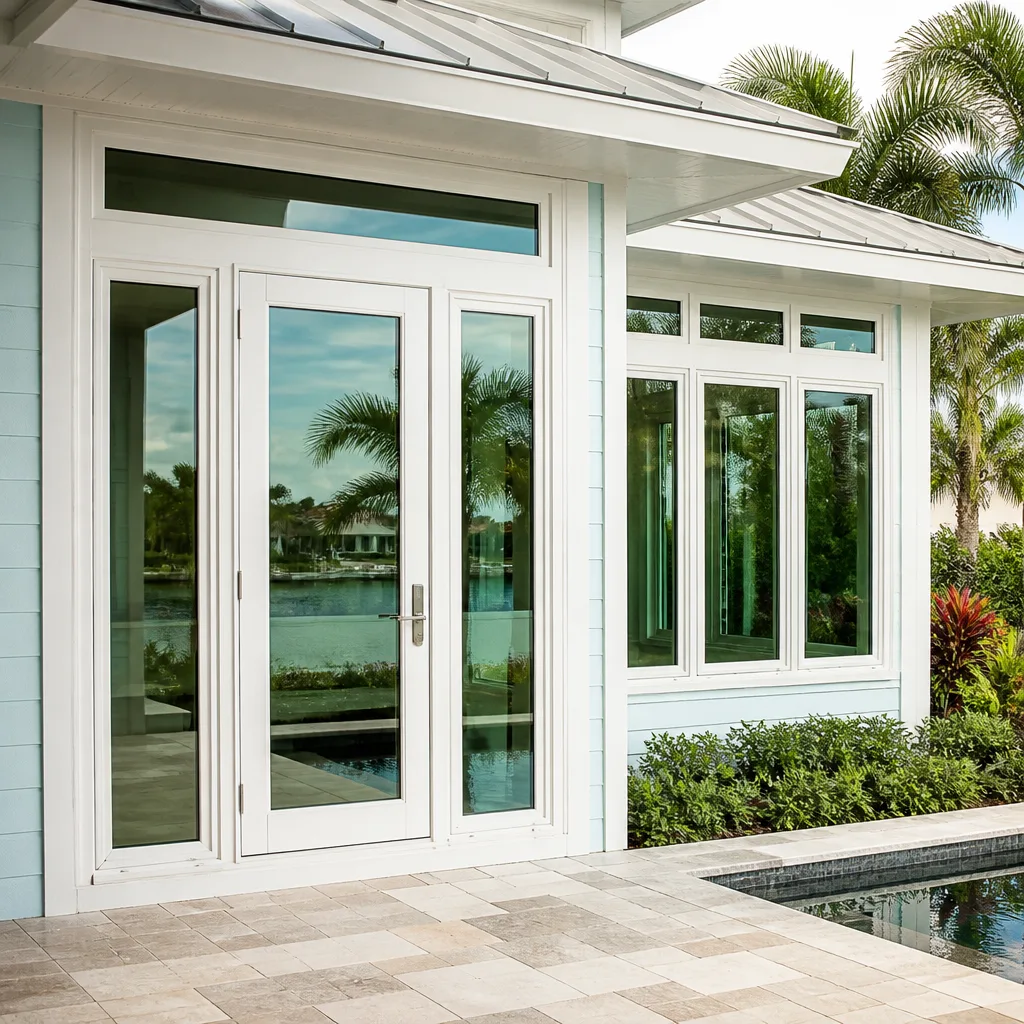
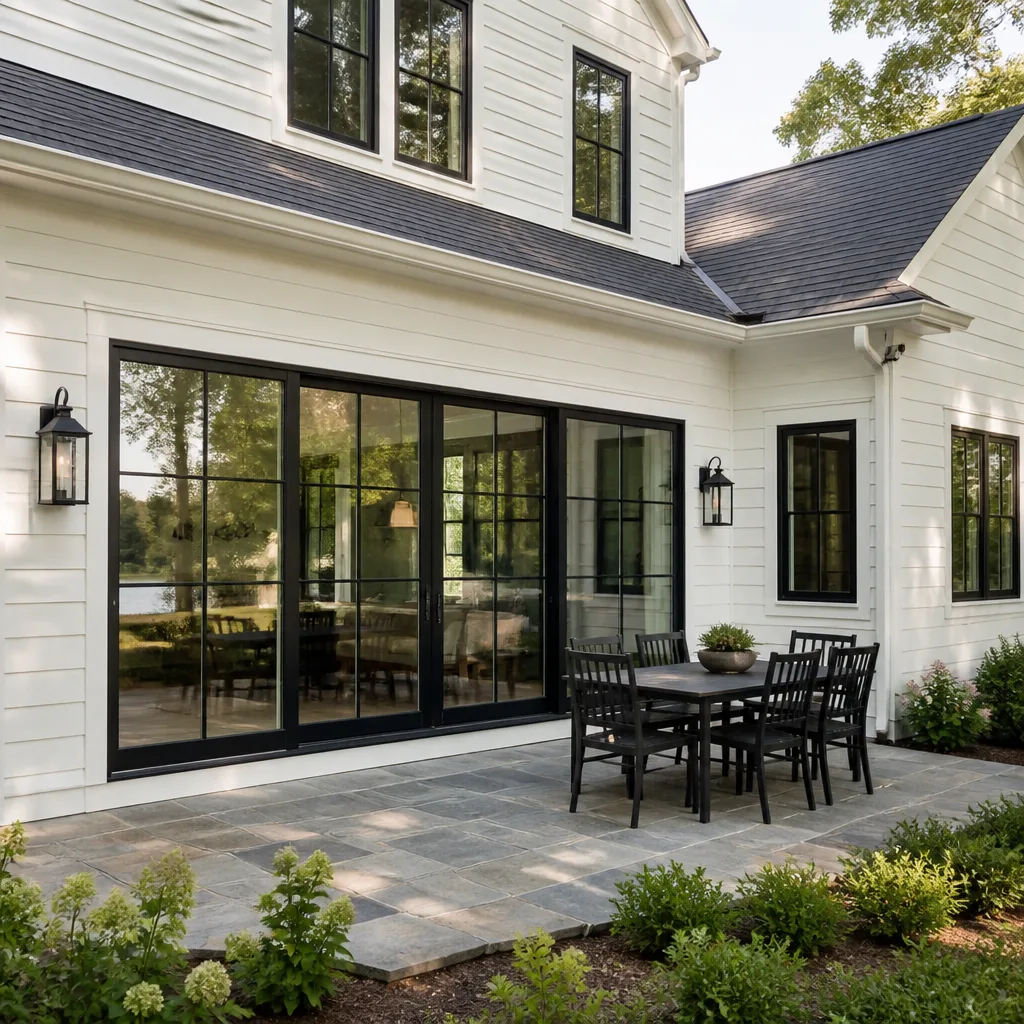
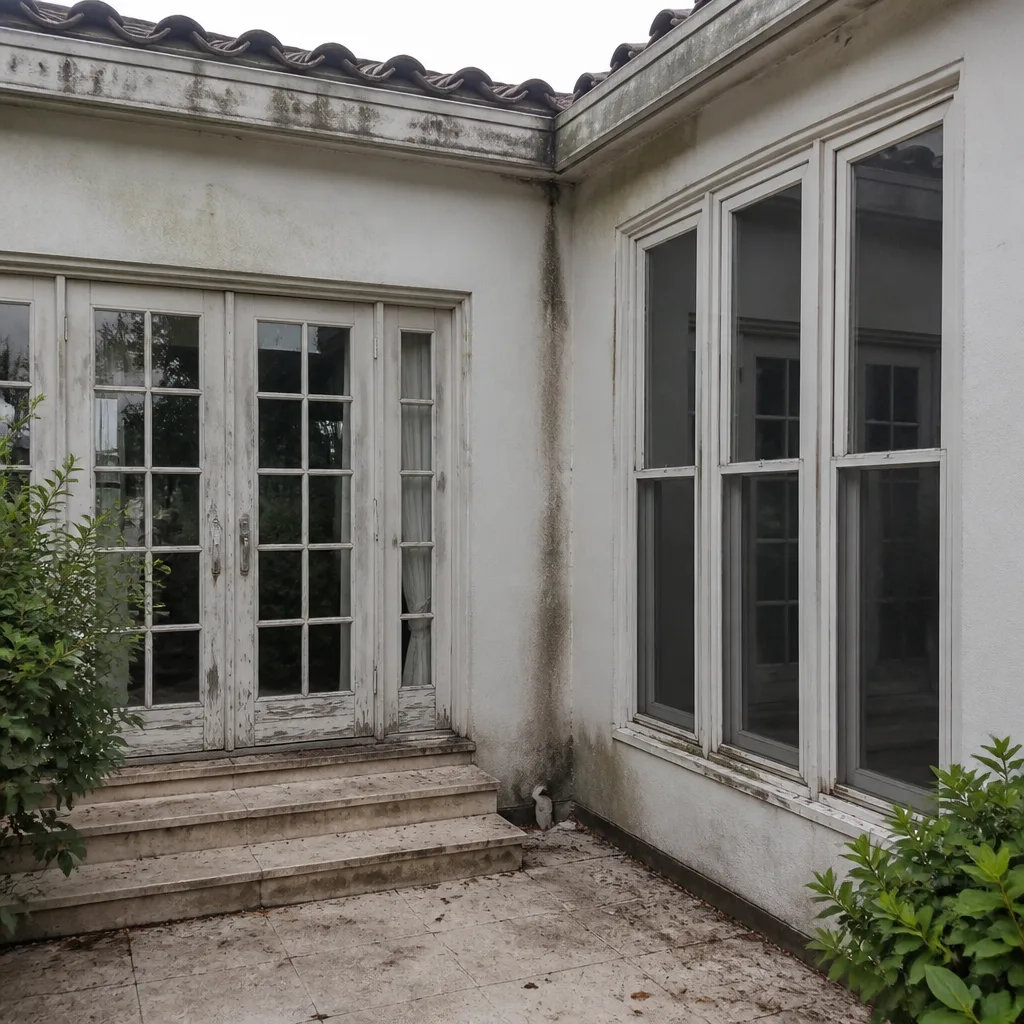 Before
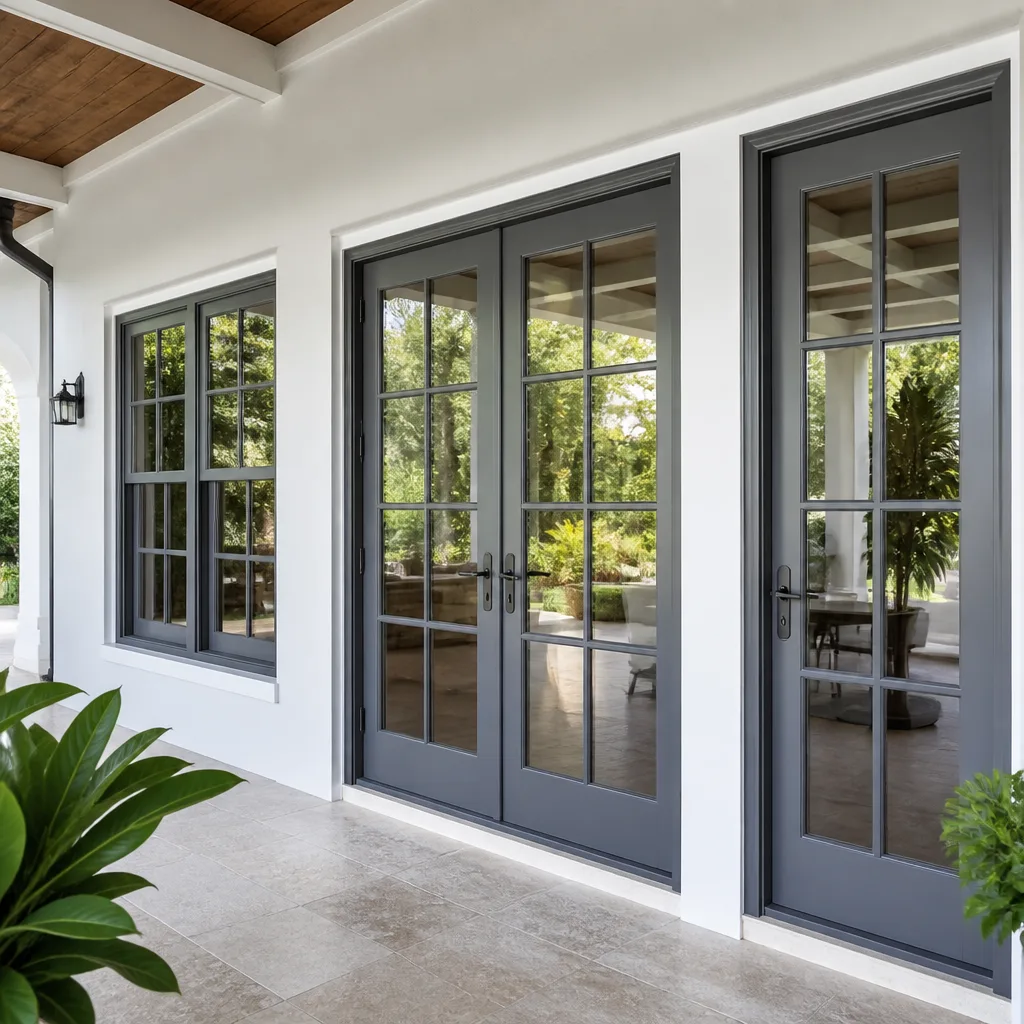 After
After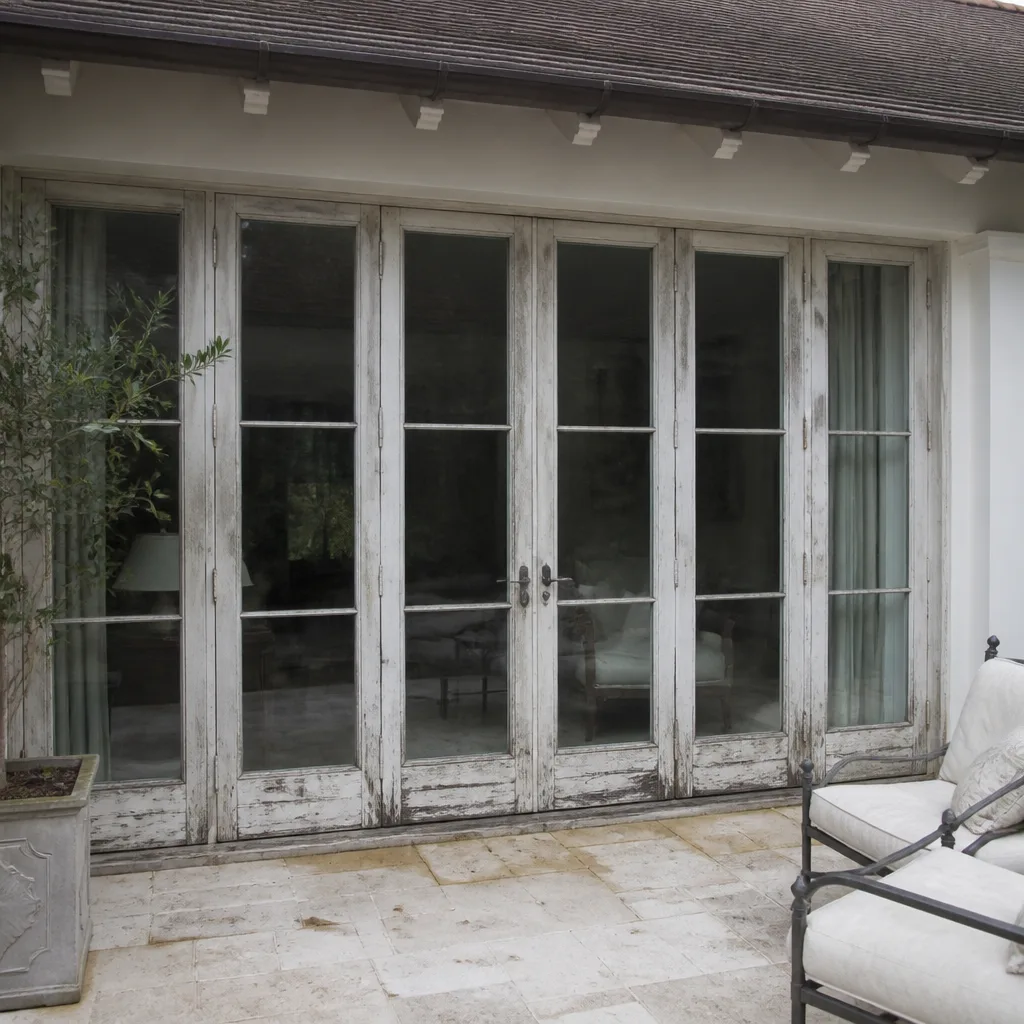 Before
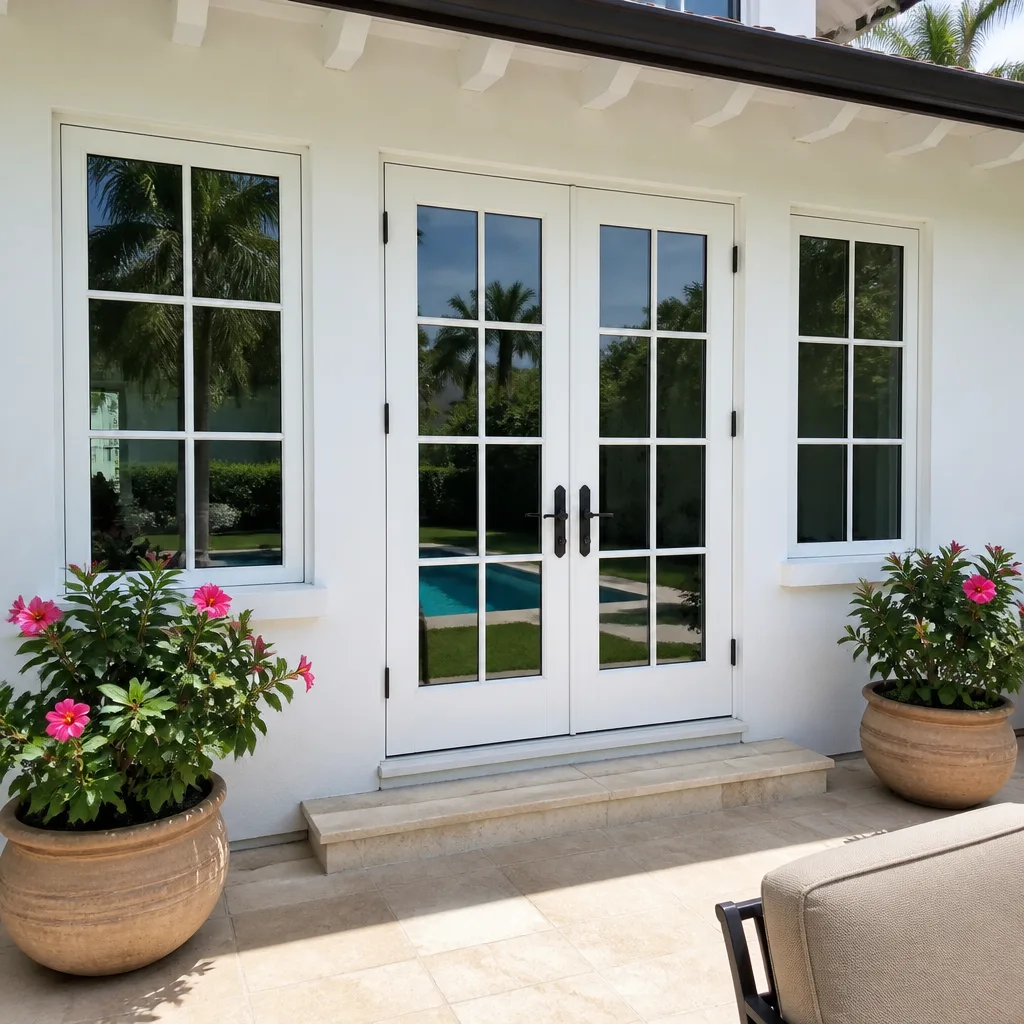 After
After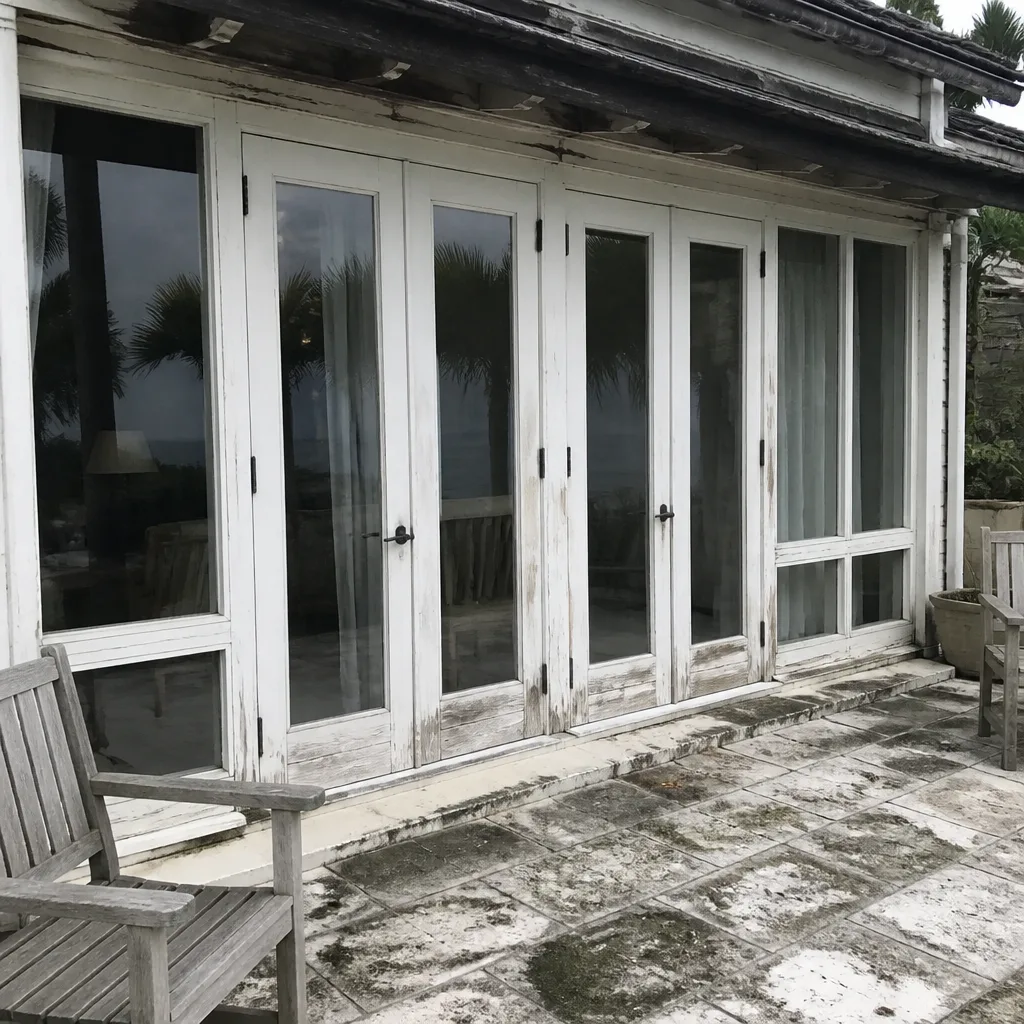 Before
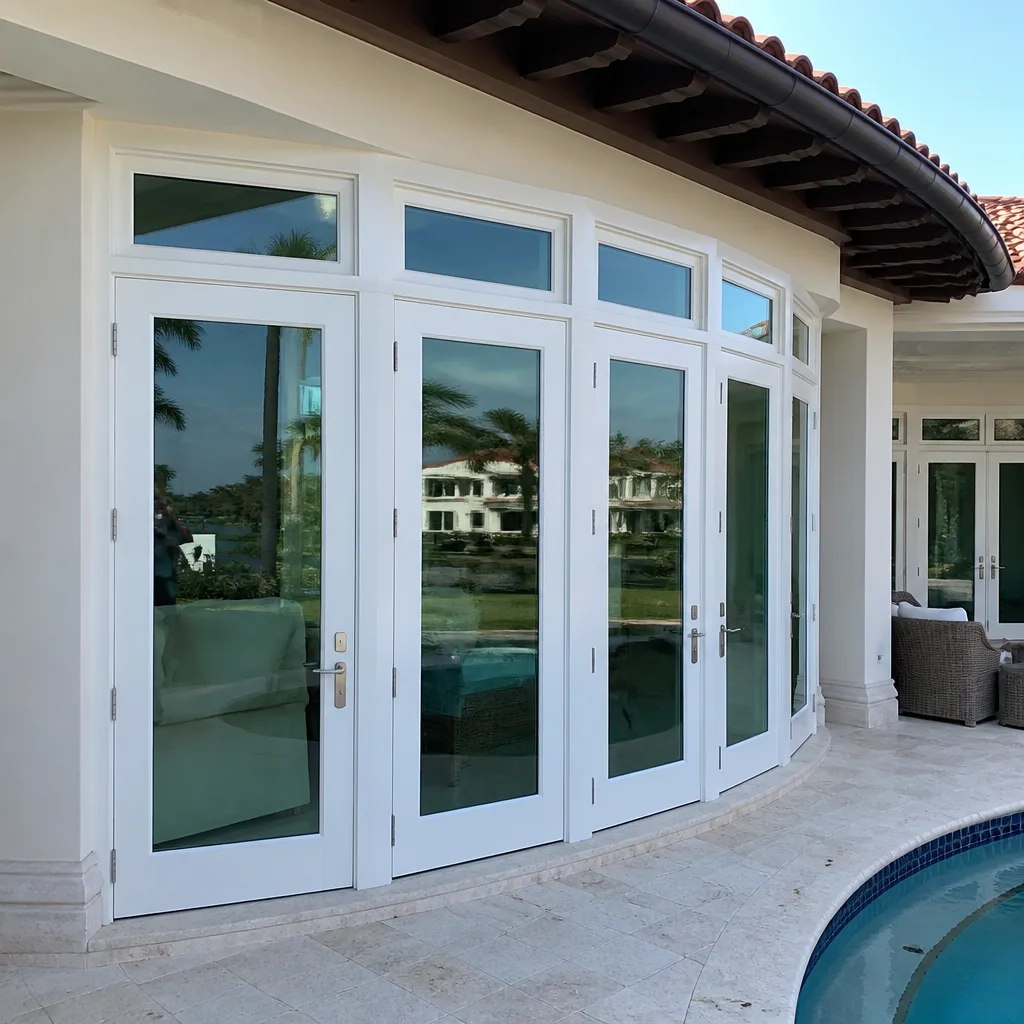 After
AfterHow to Hire a Windows & Doors Contractor in Palm Beach: A Step-by-Step Guide
In Palm Beach County, a windows and doors contractor can legally pull a permit in your name and disappear after rough-in. You’re then left holding the bag for a failed final inspection on a house you can’t legally sell. Most homeowners never see this coming because they’re asking the wrong questions at the wrong time. This guide changes that. You’ll learn the exact credential checks that expose a bad contractor before they touch your house, the contract clauses that protect you when products get backordered after hurricane season, and the line-by-line proposal red flags that separate a real Palm Beach installer from a guy who just says he is one.
Quick Answer
To hire a windows and doors contractor in Palm Beach, verify their Florida state contractor’s license and their Palm Beach County HVHZ (High Velocity Hurricane Zone) endorsement, request their subcontractor list upfront, and require a written contract with specific clauses covering backorders, permit fees, and payment schedules. Then call their references, compare at least three itemized proposals (see our Windows & Doors Cost Breakdown: The Palm Beach Homeowner’s Reference for 2026), and confirm they carry liability insurance and workers’ compensation. The installer matters as much as the window brand because a flawless PGT impact window installed incorrectly will still leak, fail inspection, and void its warranty.
Table of Contents
- Step 1: Verify the Florida License and HVHZ Endorsement
- Step 2: Check Local Track Record and References
- Step 3: Demand the Subcontractor List Upfront
- Step 4: Read Proposals Line by Line
- Step 5: Get the Contract Clauses That Protect You
- Step 6: Run the Interrogation Script
- Step 7: Understand the Warranty Chain
- Step 8: Know Palm Beach’s Specific Code Requirements
Step 1: Verify the Florida License and HVHZ Endorsement
Here’s what almost every hiring guide gets wrong: they tell you to “check the license” and leave it at that. In Palm Beach County, that’s half the job. You need two separate credentials, and most homeowners don’t know the second one exists.
The first is the Florida state contractor’s license. You can verify this through the Florida Department of Business and Professional Regulation (DBPR) website in about ninety seconds. Look for an active license in the right classification, either a Certified Building Contractor, a Certified Residential Contractor, or a Certified Specialty Contractor. If the license is inactive, suspended, or belongs to a different classification than the work being performed, walk away immediately. Don’t let anyone talk you out of this step. A contractor who can’t produce a verifiable license on demand has already told you everything you need to know.
The second credential is the one most homeowners in Palm Beach never ask about: the HVHZ endorsement. Palm Beach County sits in the High Velocity Hurricane Zone, which is a special wind-load region with stricter building standards than the rest of Florida. Products installed in this zone must meet HVHZ requirements for impact resistance and wind pressure. A contractor who works in Orlando or Tampa all year and occasionally takes a job in Palm Beach may carry a valid state license but have no experience with HVHZ-specific fastening schedules, glazing requirements, or inspection timelines. Ask directly: “Are you certified to install HVHZ-rated products in Palm Beach County, and can you show me the documentation?”
In our experience, the contractors who hesitate on this question are usually the ones who don’t know the answer. A legitimate Palm Beach installer will not only confirm the endorsement but will be able to explain, in plain English, what it means for your specific project.
Step 2: Check Local Track Record and References
Licenses and endorsements are the entry ticket. They don’t tell you anything about whether the contractor shows up on time, keeps a clean jobsite, or stands behind the work six months after the final check clears. For that, you need to look at the local record.
Palm Beach is not a huge market. Word travels fast here, and a contractor with a bad reputation doesn’t usually stay hidden for long. Start with three public sources: the Palm Beach County Contractor Licensing Division for any complaints or disciplinary actions, the Better Business Bureau for a complaint pattern, and local neighborhood groups on platforms like Nextdoor or Facebook where homeowners share contractor experiences with unusual candor.
Then ask the contractor directly for references from the last twelve months, not just from five years ago. A contractor who did great work in 2019 may have lost key crew members, changed suppliers, or cut corners since then. Request at least three references from projects similar to yours, and actually call them. Ask the reference these five questions:
- Did the crew arrive when scheduled, and did they communicate delays proactively?
- Did the final invoice match the original proposal? Were there change orders, and were they explained before work started?
- Were permits pulled, and did the project pass inspection on the first attempt?
- Would you hire this contractor again without hesitation?
- Would you let this crew work in your home while you were away?
The last question tells you more than any star rating. If a homeowner trusts a crew unsupervised in their house, that’s a signal worth its weight in gold.
Step 3: Demand the Subcontractor List Upfront
This is the step that separates a diligent homeowner from a vulnerable one. Many Palm Beach window and door contractors, especially larger operations, don’t install everything with their own W-2 employees. They use subcontractors for framing, stucco repair, window setting, or finish carpentry. That’s not automatically a bad thing. What’s a red flag is a contractor who won’t tell you who those subcontractors are before you sign.
Before you agree to any proposal, ask this exact question: “Will you provide me, in writing, the names and license numbers of every subcontractor who will work on this project, before I sign the contract?”
If the answer is yes, you’ve found someone transparent. If the answer is vague or defensive, that’s a problem. Here’s why this matters in the real world: if a subcontractor does faulty work and the general contractor disappears, you may have no direct contractual relationship with the subcontractor. You might not even know their name to report them to the county. Worse, if a subcontractor is unlicensed or uninsured and gets injured on your property, you could be pulled into a liability claim that your homeowners insurance may not fully cover.
Also ask whether the same crew will stay on the job from start to finish. A contractor who rotates different crews through a window installation loses continuity, and missed details are more likely. The best contractors in Palm Beach use consistent, familiar crews who know the products and the local inspection process.
Step 4: Read Proposals Line by Line
Low bids are seductive, especially when a window and door project runs into five figures. But in Palm Beach, a low bid often isn’t a better deal. It’s a shorter line item list. What’s not written down is not in the price, and whatever is not in the price will show up later as a change order or an argument.
Here’s a specific drill we recommend: take the lowest proposal and compare it, line by line, to the highest. The most revealing comparison is not the totals. It’s what’s missing. Here are the line items that get omitted from low bids with alarming regularity:
- Permit fees. Palm Beach County permit costs are real and unavoidable. A proposal without them means you’ll pay them separately or get a surprise.
- Disposal and debris removal. Old windows, old doors, packaging, and construction waste all have to go somewhere. If it’s not in the proposal, it’s not done.
- Flashing and waterproofing details. Windows and doors in a coastal climate need proper flashing tape, sill pans, and sealant. A proposal that doesn’t name these materials is a proposal for a leak.
- Interior trim and finish work. Replacing a window damages the surrounding trim more often than not. Who patches, paints, and finishes? If it’s not stated, it’s not included.
- Engineering or special inspection fees. Some HVHZ installations require structural engineering sign-off. That fee belongs in the proposal, not in your mailbox later.
If the low bidder’s proposal is three pages and the high bidder’s is nine, it’s not because one contractor uses more paper. It’s because one contractor has already thought through the details, and the other is planning to figure them out once the deposit clears.
Step 5: Get the Contract Clauses That Protect You
The contract is where the deal lives. Before you sign anything, you need specific protections in writing. Not verbal assurances. Not “we’ve never had a problem.” Actual clauses, on actual paper.
The three clauses that matter most in Palm Beach, especially after hurricane season:
The backorder clause. Impact-rated products from brands like CGI, CWS, and ES Windows are manufactured to order. After a major storm season, the supply chain gets stretched. A contract needs to state what happens if a product is backordered or discontinued: how pricing is affected, how the timeline changes, and whether you can cancel without penalty if the wait exceeds a stated number of weeks. For a deeper look at keeping your windows in top shape year-round, see our Impact Windows Maintenance Checklist for Palm Beach Homeowners. Without this clause, a contract signed in May with a June install can quietly become a December install with no recourse.
The damaged-on-delivery clause. Windows and doors can arrive from the factory with scratches, warped frames, or broken glass. The contract should specify that the contractor owns the responsibility for inspecting every unit upon delivery and will not install any unit that’s damaged. It should also state who pays for replacement and who absorbs the delay. If the contractor installs a damaged window and you discover it later, the fight over who’s responsible gets ugly fast.
The payment schedule and change order clause. A fair contract ties payments to milestones, not to dates. You want something like: a reasonable deposit, a progress payment at rough-in, and the balance only after the final inspection passes. Any change to the scope, any new line item, any altered product, must come as a written change order that you sign before the work changes. If a contractor tells you they “don’t do change orders,” that’s a contractor telling you the price can change whenever it suits them.
This is also the moment to ask every contractor for an equivalent to Ed Winslow’s 36500-Day Done Right Promise. In contractual terms, it’s a workmanship warranty: if the installation was not done right, the company returns and makes it right, at no charge to you. That sounds simple, but most contractors won’t put one hundred years of accountability in writing. Ask for a written workmanship commitment with a defined term, a defined scope, and a defined process for claims. If a contractor squirms at that request, you’ve learned something important.
Step 6: Run the Interrogation Script
You don’t need to become a window and door expert to hire a competent contractor in Palm Beach. You need to ask the right questions and listen to the quality of the answers. Here’s a script you can run, in order, on the first call or during the first visit. Don’t ask all of them at once. Work through them naturally, and pay attention to how the contractor responds to pressure.
- “Can you show me your Florida license number and your Palm Beach County HVHZ endorsement right now?” A good contractor has these memorized or instantly accessible. A bad one changes the subject.
- “Who will be on the job site, and are they your employees or subcontractors?” Demand the subcontractor list. If they won’t provide it, end the conversation politely and move on.
- “What brands do you install, and are you an authorized installer for those brands?” Unauthorized installation voids most manufacturer warranties. Winslow Windows & Doors is an authorized installer for eight premium brands, including PGT, CGI, CWS, and Therma-Tru. If a contractor can’t claim authorized status, ask why.
- “How do you handle permit fees, and who pulls the permit?” The contractor should pull the permit in their name. If they ask you to pull it in yours, that’s a red flag the size of a picture window.
- “What happens if my windows are backordered for three months after I sign?” If the answer is “that never happens,” you’re talking to someone who hasn’t worked through a Palm Beach hurricane season.
- “What’s your workmanship warranty, in writing, and how do I make a claim if something fails?” Listen for specifics: term length, scope, response process. Vague answers are not answers.
- “Can I see a sample proposal from a similar project?” A good contractor already has the details laid out. A messy, incomplete proposal is a preview of a messy, incomplete project.
Step 7: Understand the Warranty Chain
Window and door warranties sound simple until you read the fine print. The reality is that there are usually two separate warranties in play, and homeowners often confuse them. Knowing the difference protects you from making a decision based on a promise that doesn’t actually exist.
The first is the manufacturer’s warranty, which covers the product itself: glass breakage, frame defects, material failures, and sometimes finish. PGT and CGI, for example, offer different warranty tiers depending on the product line. But here’s the part most homeowners don’t realize: a manufacturer’s warranty is only as good as the installation. If the window leaks because it was installed poorly, the manufacturer will almost certainly deny the claim. They didn’t sell you a leaky window. The installer created the leak.
That’s where the second warranty comes in: the installer’s workmanship warranty. This covers the labor, the flashing, the sealants, the fastening, and the fit. It protects you from exactly the failures that manufacturers won’t touch. In Palm Beach’s salt air and storm-driven rain, this gap between the two warranties is a chasm. Water intrusion is the single most common failure we see, and it’s almost always an installation issue, not a product defect.
When you compare contractors, ask each one to explain, in writing, what their workmanship warranty covers and how claims work. Then verify that the manufacturer’s warranty will be registered in your name after installation. Some contractors forget to register products, which can shorten or void coverage. A good contractor handles this paperwork without being asked.
Step 8: Know Palm Beach’s Specific Code Requirements
Palm Beach County’s building code is not a suggestion. It’s a series of enforced standards designed around one simple fact: hurricanes are not hypothetical here. The High Velocity Hurricane Zone designation means your windows and doors must be tested and approved for specific wind pressures and impact resistance standards. This is not a detail your contractor can negotiate around.
Here are the Palm Beach-specific requirements you should understand before hiring:
- HVHZ product approval. Every impact window and door product installed in Palm Beach County must carry a Florida Product Approval or Miami-Dade NOA (Notice of Acceptance) that’s valid for the HVHZ. If a contractor proposes a product without this documentation, the permit will hit a wall immediately.
- Impact rating for new construction and major renovations. The Florida Building Code requires impact-resistant glazing or shutters on most new residential construction and substantial renovations in the HVHZ. A contractor should be able to tell you which of your openings require impact protection and which can use non-impact products.
- Wind-load calculations. The right product for a canal-front home in Jupiter might not be the right product for a second-floor condo in West Palm Beach. A competent contractor runs wind-load calculations for your specific structure and location before recommending any product.
- Permit and inspection sequencing. Palm Beach County inspections are scheduled, not drop-in. Your contractor should know the sequence for window and door installations: rough-in, product approval, fastener inspection, and final. A contractor who seems confused about the order of inspections is a contractor who hasn’t done this often enough.
The right contractor talks about these details without being prompted. The wrong contractor waits for you to bring them up, then improvises answers.
Common Mistakes to Avoid
- Choosing the brand without vetting the installer. A PGT window is only as good as the crew that fastens it into your opening. The brand doesn’t install itself, and the manufacturer’s warranty doesn’t cover installation errors.
- Accepting the low bid without comparing line items. The cheapest proposal is usually the least complete one. Missing permit fees, disposal, and flashing will all reappear later, with interest.
- Skipping the HVHZ endorsement check. A Florida license is not enough in Palm Beach. The HVHZ endorsement is the difference between a contractor who knows hurricane code and one who’s learning it on your house.
- Signing before asking for the subcontractor list. If you don’t know who’s working in your home, you can’t check their licenses, their insurance, or their history. A contractor who won’t share this list is hiding something.
- Trusting a verbal warranty. “We’ll take care of you” is not a workmanship warranty. Get it in writing, with a defined term and a defined claims process.
- Paying too much upfront. A contractor who demands half the total before materials are ordered has transferred all the risk to you. Reasonable deposits are normal; excessive ones are not.
- Ignoring the permit responsibility. The contractor should pull the permit in their name. If they ask you to pull it, they’re offloading legal liability onto you before the first window comes out of the box.
When to Call a Professional
You should call a professional windows and doors contractor whenever the work affects the building envelope of your home. That includes replacing multiple windows, installing impact-rated products, repairing rotted frames, replacing a sliding glass door, or changing the size of any opening. These are not weekend projects, and in Palm Beach’s HVHZ, a mistake in waterproofing or fastening becomes a water intrusion problem within the first serious rain. If you notice fogging between panes, difficulty opening or closing windows, drafts, visible frame rot, or water stains around openings, these are signs that the failure has already started. A trained contractor can identify the root cause and fix it before the damage expands. Winslow Windows & Doors offers free estimates in Palm Beach, and you can call (561) 831-7863 to schedule one. You’ll reach a live person, not a voicemail loop.
Frequently Asked Questions
In Palm Beach, a typical impact window replacement runs roughly $800 to $1,800 per opening, installed, depending on the product brand, the size of the opening, and the complexity of the installation. A full-home window replacement in an average 2,000-square-foot house often lands between $18,000 and $45,000, and a single impact-rated entry door can run $3,000 to $7,000 installed. These are wide ranges because Palm Beach’s HVHZ requirements and product choices vary significantly by structure. The only way to get a real number is an itemized estimate. Call (561) 831-7863 for a free, line-by-line quote with no trip charge inside the home county.
A contractor needs a Florida state contractor’s license from the DBPR, plus familiarity with and products approved for Palm Beach County’s High Velocity Hurricane Zone. The state license proves they’re legally permitted to contract in Florida; the HVHZ product approvals and local inspection knowledge prove they understand Palm Beach’s specific wind-load and impact standards. Always verify both before signing.
Look up the contractor by name on the Florida DBPR website to confirm the license is active and in the correct classification. Then ask for certificates of insurance for general liability and workers’ compensation, issued directly from the insurance carrier, not a copy from the contractor’s file. Call the carrier to confirm the policy is current and covers the scope of your project.
A thorough proposal includes product specifications with HVHZ approvals, a per-opening price, permit fees, disposal, flashing materials, interior trim repair, a payment schedule tied to milestones, a written workmanship warranty, and a subcontractor list. Anything less is an incomplete document and a red flag.
It shouldn’t, if the proposal is complete and the contract includes a written change-order clause. Any change to scope, product, or condition should come as a written change order that you sign before the work changes. Contractors with itemized, upfront pricing don’t surprise you with new numbers at the final invoice. Call (561) 831-7863 to speak with a live person about what upfront pricing actually looks like in writing.
A single opening replacement is usually a half-day to a full day, depending on the condition of the surrounding frame. A full-home replacement typically spans two to five days for installation, spread across separate visits if the home is occupied. Product lead times for impact-rated windows from brands like CGI or CWS can add several weeks, especially during peak hurricane-season demand. Get a timeline in writing before you sign.
The Bottom Line
Hiring a windows and doors contractor in Palm Beach is not about finding the cheapest estimate or the most aggressive sales pitch. It’s about verifying the credentials, reading the proposal line by line, and demanding contractual protections that hold the installer accountable long after the final check clears. The brand on the window matters, but the person fastening it into your house matters more. Take the time to run the interrogation script, avoid the common mistakes, and choose a contractor who answers every question directly and puts every promise in writing. For honest, no-pressure guidance and a free estimate served by a live person, call Winslow Windows & Doors for window installation in Palm Beach at (561) 831-7863. The one down the road.
Written by Ed Winslow, Owner at Winslow Windows & Doors, serving Palm Beach since 2011.
Six Reasons Homeowners Choose Winslow Windows & Doors
Impact systems engineered to design pressures up to +/-100, matched to your wind zone - your openings hold when the storm arrives.
Low-E insulated impact glass from our manufacturer lines commonly cuts monthly cooling bills 20-30%.
Laminated impact glass shuts out up to 40% of outside noise - traffic, neighbors, weather.
Monitoring services run $30-90 a month. Laminated impact glass resists forced entry around the clock, with no subscription.
Florida homeowners average around 25% savings on the windstorm portion of their policy after protecting every opening - some homes qualify for more.
A full impact package upgrades curb appeal, buyer confidence and appraised value in one project.